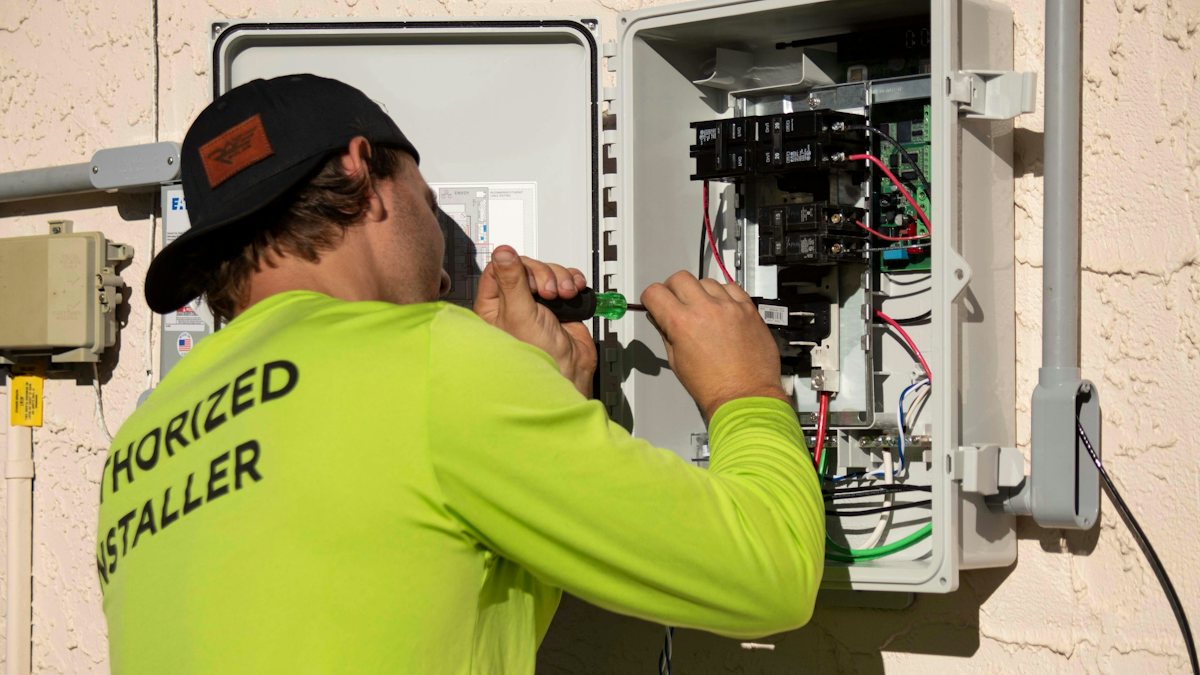
What electrical work do we handle in Springfield?
We focus on residential electrical work, from the meter on the outside wall to the outlets in every room. Each service below has its own page that explains what the job involves, when you need it, what changes the price, and the questions homeowners ask most.
Electrical Repair
Dead outlets, tripping breakers, flickering lights, buzzing switches, and other problems tracked down and fixed.
Electrical Panel Upgrades
New breaker panels, service upgrades to 200 amps, and replacement of fuse boxes and problem panels.
EV Charger Installation
Level 2 home chargers and 240-volt outlets, with a load check to see whether your panel can handle it.
Lighting Installation
Recessed lights, ceiling fans, fixture swaps, under-cabinet lighting, and outdoor and security lights.
Generator Installation
Standby generators and transfer switches so you can keep power on safely when the grid goes down.
Home Rewiring
Replacing old knob-and-tube or worn wiring, adding grounded outlets, and rewiring during remodels.
If your job isn't listed, call anyway. Small jobs like adding an outlet in the garage, replacing a dead GFCI in the bathroom, or running a circuit for a new freezer are common, and they can often be done on the same visit as a bigger project.
When should you call an electrician right away?
Some electrical problems can wait for a convenient appointment. Others can't. Turn off the circuit at the panel and call right away if you notice any of these:
- A burning smell or smoke coming from an outlet, switch, light, or the panel itself.
- Outlets or switch plates that are warm, discolored, or scorched around the edges.
- A breaker that trips again the moment you reset it, or a fuse that keeps blowing.
- Sparks or a crackling sound when you plug something in or flip a switch.
- Lights that dim hard when the air conditioner, dryer, or microwave starts.
- Any water near wiring, like a roof leak above a light fixture or a flooded basement with outlets near the floor.
These are signs of loose connections, overloaded circuits, or damaged wiring, and the electrical repair page explains how each one gets traced. Loose connections heat up, and heat is how electrical fires start. A breaker that keeps tripping is doing its job. Don't replace it with a bigger one or tape it on.
Why do older Springfield homes have more electrical problems?
Springfield has a lot of older houses. About 40 percent of homes in the city were built before 1970, and about 13 percent before 1940, according to NeighborhoodScout's housing data. Neighborhoods like Midtown, Rountree, and the streets around Drury and downtown have many homes that were wired for a fraction of the power a family uses today.
That age shows up in a few predictable ways:
- Small or outdated panels. Many older homes started with 60-amp or 100-amp service, or a fuse box. That was plenty for lights and a refrigerator. It's tight once you add central air, an electric range, a hot tub, or an EV charger.
- Old wiring. Knob-and-tube wiring from the early 1900s has no ground wire, and its insulation gets brittle with age. Homes from the 1960s and early 1970s sometimes have aluminum branch wiring, which needs the right connectors to stay safe.
- Two-prong outlets. Ungrounded outlets don't protect you or your electronics the way grounded ones do.
- Years of do-it-yourself changes. Extra outlets tapped off the wrong circuit, splices with no junction box, and wire that's too small for the breaker are common finds in houses that have changed hands several times.
None of this means an older house is unsafe. It means the wiring should be checked by someone who knows what to look for, especially before you add a big new load.
Why does storm season matter for your electrical system?
The Ozarks get ice storms, straight-line winds, and tornado warnings, and the power grid takes the hit. The January 2007 ice storm left more than 75,000 City Utilities customers in Springfield without power, some for several weeks, and crews replaced 330 power poles, KY3 reported. In April 2025, a windstorm knocked out power to about 50,000 City Utilities customers, the largest outage since that ice storm.
Storms affect your home's electrical system in two ways. First, a long outage is when people reach for a generator, and plugging one into the house the wrong way is dangerous. City Utilities requires customers to notify it when installing an emergency generator and requires a transfer switch so the generator can't feed power back into the lines. Our generator installation page explains how that works. Second, storm damage to the service mast or the wires running to your house is your responsibility to repair on the house side before City Utilities can reconnect.
How does electrical work get permitted in Springfield?
Inside city limits, electrical work goes through the City of Springfield's Building Development Services. The city says an electrical permit is required for all electrical work except a few small tasks, like replacing light bulbs, plugging appliances into existing outlets, and replacing a defective breaker or fuse. In most cases, a city-licensed master electrician must be listed on the permit. Homeowners can pull certain permits themselves if they live in the home, but some work requires a licensed contractor.
Missouri doesn't require a statewide electrician license, so local licensing is what matters. In Springfield, electrical contractors are licensed through Building Development Services, and the city lets you confirm a contractor's license on its website. Ask for the license number before anyone opens up your panel.
What affects the price of electrical work?
Electrical work is priced job by job, because the same task can take one hour in one house and a full day in another. These are the factors that change the number:
- What's behind the walls. Finished walls, plaster, and tight attics make it slower to run new wire than an open basement or crawl space.
- The age and condition of the existing wiring. Old wiring sometimes has to be brought up to current code once it's opened up.
- Panel capacity. If your panel is full or too small, a new circuit may mean a panel upgrade first.
- Distance. A circuit that runs from the panel to the far side of the house or out to a detached garage takes more wire and more labor.
- Permits and inspections. Most jobs need a city permit, and some need more than one inspection.
- Utility coordination. Service upgrades require City Utilities to disconnect and reconnect power, which adds scheduling time.
- Fixtures and equipment. You can supply your own light fixtures or charger, or have the electrician supply them. See lighting installation for what changes the price of new lights.
A good estimate tells you what's included and whether the permit is part of the price. If you get a single number with no detail, ask for a breakdown.
Should you repair or replace old electrical equipment?
Repair makes sense when the problem is isolated. A single bad outlet, a worn switch, a loose wire at one fixture, or one failed breaker can usually be fixed in a short visit.
Replacement makes more sense when the problem is the system itself. If your panel is full, uses fuses, or is a brand with a known history of breakers that fail to trip, replacing it is safer than adding to it. If several rooms have ungrounded outlets, brittle wiring, or repeated problems, rewiring those circuits fixes the cause instead of chasing one symptom at a time. A good electrician will tell you which situation you're in, even when the answer is the smaller job. See electrical panel upgrades and home rewiring for more detail.
How does an electrical job work from first call to final inspection?
Most residential jobs in Springfield follow the same steps:
- You call or send the form with what's going on and the town.
- A visit or a quick diagnosis. For repairs, the electrician tracks down the cause. For projects, they look at your panel, measure runs, and talk through options.
- A written estimate that lists the work, the materials, and whether permits are included.
- Permit. The electrician pulls the permit through the city before work begins.
- The work. Power is shut off to the circuits being worked on, and the job gets done.
- Inspection. A city inspector checks the work. For service upgrades, City Utilities reconnects power after the inspection passes.
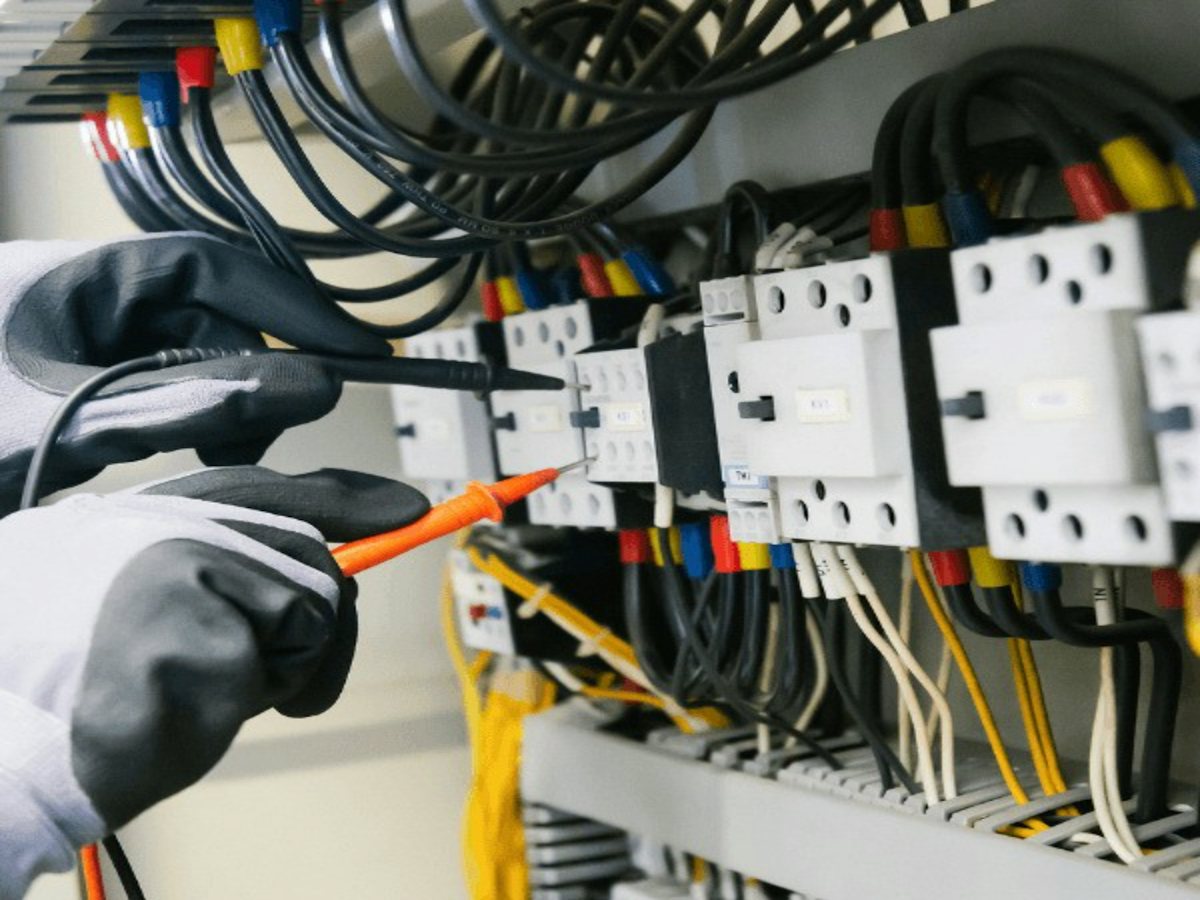
Where do we work?
We do residential electrical work across Greene County and in nearby towns in Christian and Webster counties.
- SpringfieldGreene County
- BattlefieldGreene County
- RepublicGreene County
- WillardGreene County
- StraffordGreene County
- Fair GroveGreene County
- NixaChristian County
- OzarkChristian County
- RogersvilleWebster County
- MarshfieldWebster County
See the service areas page for how permits work outside Springfield city limits.
Frequently asked questions
Do I need a permit to replace an outlet or light fixture in Springfield?
The City of Springfield requires an electrical permit for nearly all electrical work. The exceptions it lists are small, like replacing bulbs and plugging appliances into existing outlets. If you're not sure whether your job needs one, call the permit desk at 417-864-1585 or ask your electrician.
How do I check an electrician's license in Springfield?
Springfield licenses electrical contractors through Building Development Services, and the city lets you confirm a contractor's license on its website. Ask for the license number and check it before work starts.
Why does my breaker keep tripping?
Usually the circuit is overloaded, a device on it has a short, or there's a loose or damaged wire. Unplug things on that circuit and reset it once. If it trips again right away, leave it off and call an electrician.
How long does an electrical panel upgrade take?
The work itself usually takes most of a day. Scheduling the city inspection and the City Utilities reconnect adds time, so plan on the power being off for part of a day.
Are flickering lights dangerous?
One flickering bulb is usually just a loose or failing bulb. Lights that flicker across several rooms, or dim when big appliances start, can point to a loose connection or a problem with your service, and those should be checked soon.
Talk to an electrician in Springfield
Call and describe the problem or the project, or send the form with a few details. Someone will follow up to set a time to look at it.